
Decreased Collagen Production After 25: Signs, Causes & How to Start Early


Collagen & Anti-Aging
By Medorna Wellness Team · Updated July 2026 · 7 min read
Somewhere in your mid-twenties, your body quietly starts a process nobody warns you about. Skin holds a little less bounce by evening. Hair sheds a fraction more in the shower. Joints feel stiffer after a long day at your desk. This is decreased collagen production, and it begins earlier — and more universally — than most people realise.
It isn’t a flaw. It’s biology. But understanding why it happens, and when to start paying attention, makes a real difference to how it plays out over the next decade.
What Is Collagen, and Why Does It Matter So Much?
The protein that holds your skin, hair, and joints together
Collagen is the most abundant protein in the human body, forming the structural scaffolding beneath skin, hair, nails, cartilage and connective tissue. It’s what gives skin its firmness, joints their cushioning, and hair its strength at the root. Without it, everything it supports gradually loses shape.
How much collagen your body naturally makes (and loses)
Your body produces collagen most efficiently in your teens and early twenties. From that point on, both production and quality gradually taper off, which is exactly why decreased collagen production is treated as a normal, expected part of adult biology rather than a rare condition, as documented in peer-reviewed research on hydrolyzed collagen [1].
The Science Behind the Age-25 Decline
Why collagen production slows down, explained simply
From the mid-twenties onward, collagen synthesis drops by roughly 1 to 1.5 percent every year, a rate confirmed by dermal tissue studies published through the U.S. National Institutes of Health [2][3]. It’s a gentle curve rather than a cliff — which is precisely why decreased collagen production goes unnoticed for years before it becomes visible. The fibroblast cells responsible for producing new collagen simply become less active with age [2].
What triggers it — genetics, sun exposure, pollution, diet
Genetics set your baseline, but daily life decides the pace. UV exposure breaks down existing collagen fibres faster than the body rebuilds them. Urban pollution adds oxidative stress at a cellular level. Diets low in protein, vitamin C and zinc quietly limit the raw materials collagen synthesis depends on, while high sugar intake stiffens existing fibres through a process called glycation, which produces compounds known to weaken the skin’s collagen matrix over time [4]. Chronic stress and poor sleep add another layer to this decline.
Early Signs You’re Already Losing Collagen (Even If You Feel Fine)
Skin — dullness, dehydration, fine lines showing up earlier than expected
Skin that feels tighter, drier by evening, or shows fine lines earlier than you’d expect for your age is often the first visible marker of decreased collagen production.
Hair — increased shedding, thinning, slower growth
Hair follicles rely on the same structural protein network as skin, so more strands in your hairbrush or a thinner ponytail is frequently linked to the same underlying decline.
Joints — subtle stiffness after workouts or long sitting hours
A longer recovery time after exercise, or stiffness after hours at a desk, is one of the most overlooked signs — collagen makes up a large share of cartilage and connective tissue.
“Collagen loss is rarely sudden — it’s cumulative. The earlier it’s supported, the less there is to reverse later.”
— Dermatology Research Insight
Why “Starting Early” Actually Works Better Than “Fixing It Later”
Prevention vs. reversal — what the research suggests
Supporting collagen levels before visible loss sets in is consistently easier than trying to rebuild structure once it’s already compromised. Prevention works with the body’s existing framework; reversal has to rebuild it from a deficit.
Why your 20s and early 30s are the ideal window to start
This is the window where decreased collagen production is still mild and gradual, making it the most cost-effective and biologically responsive time to build a supportive routine — well before the compounding effects of your late 30s and 40s.
How to Actually Start — Without Overcomplicating It
What to look for in a collagen supplement
Prioritise hydrolyzed collagen peptides — broken down for better absorption — with no added sugar and a transparent ingredient list. A meta-analysis of 26 randomized controlled trials found that hydrolyzed collagen supplementation significantly improved both skin hydration and elasticity compared to a placebo [5]. Formulas that pair collagen with supporting actives like vitamin C and hyaluronic acid can offer a more complete approach, since vitamin C acts as a required cofactor in the body’s own collagen synthesis process [6].
Powder vs. capsules — which fits a beginner’s routine better
Powders offer flexible dosing and dissolve unnoticed into coffee, tea or a smoothie, while capsules suit those who’d rather skip mixing altogether or are travelling frequently. For beginners wanting a clean, single-ingredient start, a grass-fed unflavored powder is usually the simplest entry point, since there’s no taste to adjust to and no capsule count to track.
How to build a simple daily habit
One scoop, stirred into your morning chai, coffee or smoothie, is enough to make it stick. It dissolves without changing taste or texture, so there’s nothing extra to remember or prepare. A clinical trial tracking daily hydrolyzed collagen intake over 12 weeks found measurable improvements in skin, scalp and hair condition, reinforcing that consistency — not dosage spikes — drives results [6].
Try Before You Commit: A Low-Risk Way to Start
Why a starter size makes sense for first-time buyers
If you’re unsure whether collagen fits your routine long-term, starting with a smaller jar removes the pressure of committing to months of product upfront. It’s enough to build the habit and genuinely feel the difference before deciding to go bigger.
What results to realistically expect, and by when
Most people notice improved skin hydration and reduced hair shedding somewhere between 8 and 12 weeks of consistent daily use, a timeline consistent with clinical research combining oral collagen peptides with supporting vitamins for skin and joint wellbeing [7]. Collagen isn’t an overnight fix — it’s a slow rebuild, which is exactly why starting early carries so much weight.
Recommended For You
Based on where you are in your collagen journey — just starting out, building a routine, or looking for an enhanced formula — here’s a quick side-by-side to help you choose.
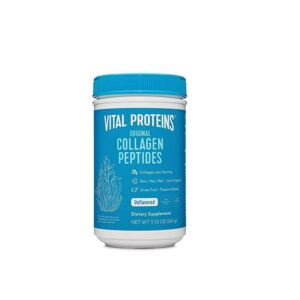
Vital Proteins Collagen Peptides – 10oz (284g)
Best for first-time buyers testing a daily routine
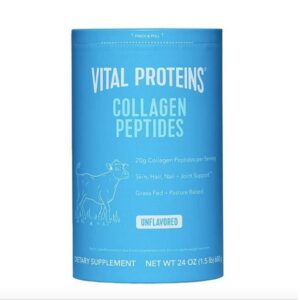
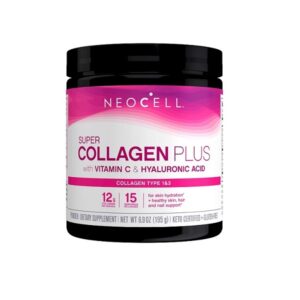

Collagen Peptides Powder – 16oz, Grass-Fed
Best for clean-label, single-ingredient seekers
Final Word — The Best Time to Start Was Yesterday, the Next Best Time Is Now
Decreased collagen production is not a warning sign — it’s simply the body’s timeline, and it comes for everyone eventually. What changes the outcome isn’t genetics or luck, but how early you choose to pay attention. A small, consistent daily habit today is worth far more than an urgent fix a decade from now, and the routine you build in your twenties is one your future skin, hair and joints will quietly thank you for.
Frequently Asked Questions
At what age does decreased collagen production begin?
Typically the mid-20s, with a gradual decline of about 1–1.5% per year.
Can it be reversed once it starts?
Not fully, but its pace can be slowed and its effects supported through diet, lifestyle and hydrolyzed collagen peptides, per clinical review data on collagen supplementation [5][6].
Should I start with a small jar or a full-size one?
First-time users often prefer a starter size to build the habit, then move to a larger jar once it’s part of their routine.
Sources & References
- Hydrolyzed Collagen — Sources and Applications, National Library of Medicine (PMC), NIH. pmc.ncbi.nlm.nih.gov/articles/PMC6891674
- Effects of collagen-derived bioactive peptides on cultured human dermal fibroblasts, PMC, NIH. pmc.ncbi.nlm.nih.gov/articles/PMC6041269
- Comprehensive Quantification of Collagen, Elastin, and Glycosaminoglycans in the Human Facial Dermis, PMC, NIH. pmc.ncbi.nlm.nih.gov/articles/PMC12036737
- Advanced Glycation End Products in the Skin: Molecular Mechanisms and Inhibitory Pathways, Frontiers in Medicine. frontiersin.org
- Effects of Oral Collagen for Skin Anti-Aging: A Systematic Review and Meta-Analysis, PMC, NIH. pmc.ncbi.nlm.nih.gov/articles/PMC10180699
- A Clinical Trial Shows Improvement in Skin Collagen, Hydration, Elasticity, Wrinkles, Scalp, and Hair Condition Following 12-Week Oral Intake of Hydrolysed Collagen, PMC, NIH. pmc.ncbi.nlm.nih.gov/articles/PMC11254459
- Daily Oral Supplementation with Collagen Peptides Combined with Vitamins Improves Skin Elasticity and Joint Wellbeing, PubMed, NIH. pubmed.ncbi.nlm.nih.gov/30122200
EXPLORE MORE