
Male Pattern Baldness: Causes, Stages & What Actually Works

Men’s Health & Wellness
Hair Care
Why thinning hair in men happens, how to spot the type you’re dealing with, and the routine-level changes that make a real difference — without the guesswork.
01 — The HookMore Hair on the Pillow Than Usual?
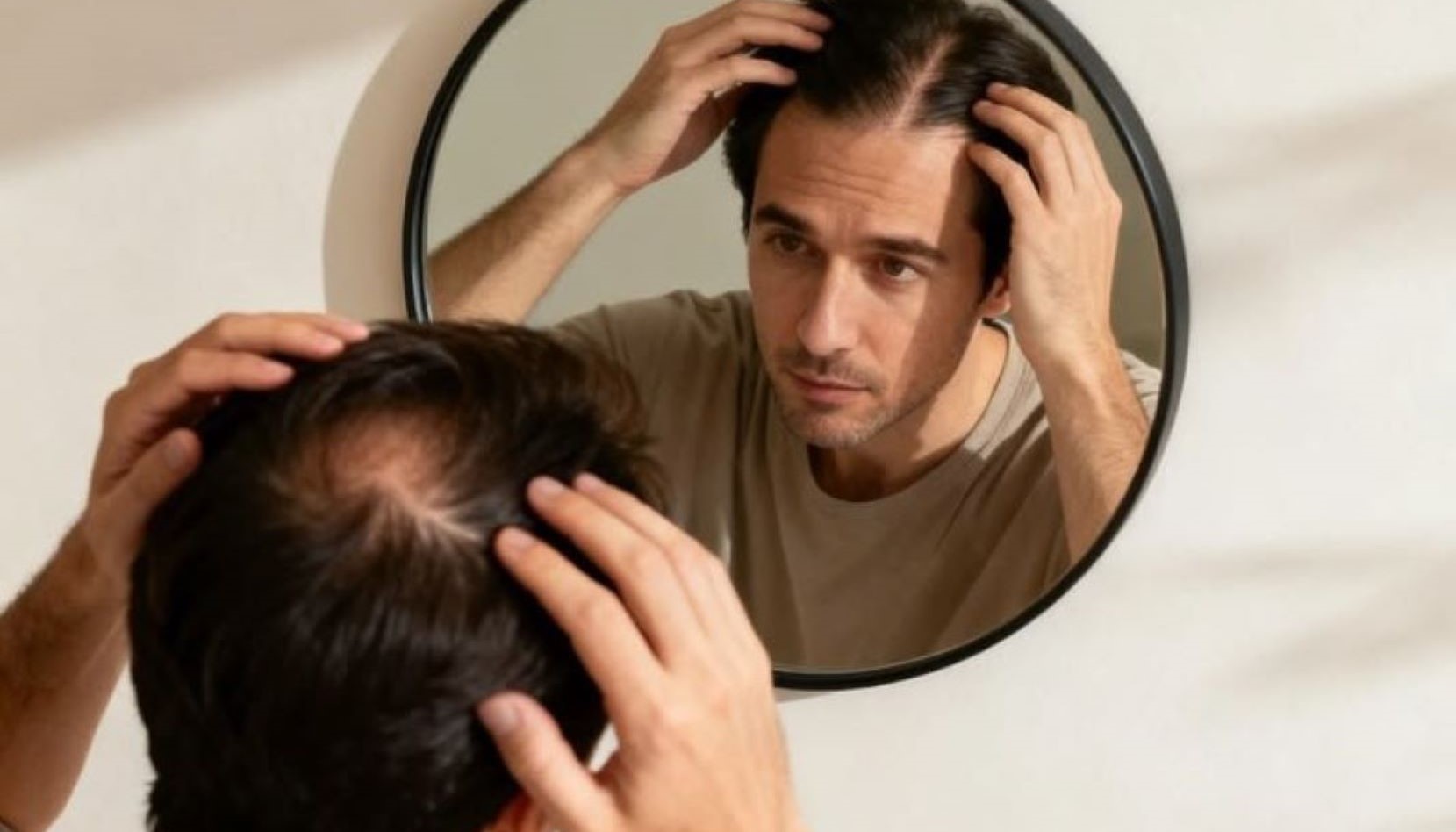
Notice more strands on your pillow, clogging the shower drain, or a hairline that looks different in photos than it did a year ago? You’re not imagining it. Male pattern baldness affects close to half of Indian men by age 50, and for many it starts far earlier, pushed along by pollution, stress, and the hard water common across Indian cities. The good news is that male pattern hair loss is also one of the most studied, most manageable forms of hairfall in men — and understanding why it happens is the first real step to slowing it down.
02 — Root CausesWhy Men Lose Hair
Hairfall in men rarely has a single cause — it’s usually a mix of the following, layered on top of each other:
- Genetics (Androgenetic Alopecia): accounts for roughly 95% of male hair loss. A hormone called DHT gradually shrinks hair follicles, shortening the growth cycle until strands grow finer and eventually stop altogether. This is what’s technically meant by male pattern baldness.
- Nutritional deficiency: low biotin, protein, iron, or zinc weakens the hair shaft and slows regrowth.
- Scalp issues: dandruff, excess oil, and clogged follicles create an environment where hair struggles to grow.
- External stressors: pollution, hard water (a major factor in Indian metros), harsh sulfate-based shampoos, and heat styling all add cumulative damage.
- Lifestyle: chronic stress, poor sleep, and crash dieting can trigger temporary shedding on top of any underlying pattern loss.
03 — Self-CheckTypes & Stages of Male Pattern Baldness
Not all hairfall in men looks the same, and identifying your type helps you know what to expect next:
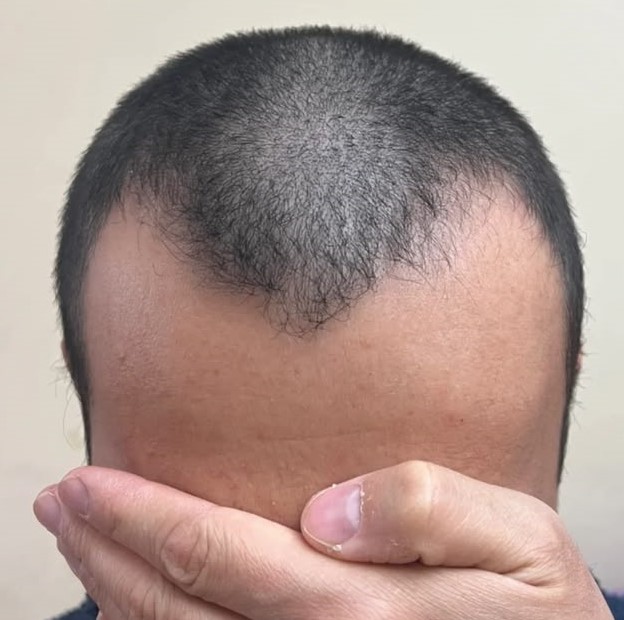
Receding Hairline
The most common early sign of male pattern hair loss, usually starting at the temples.
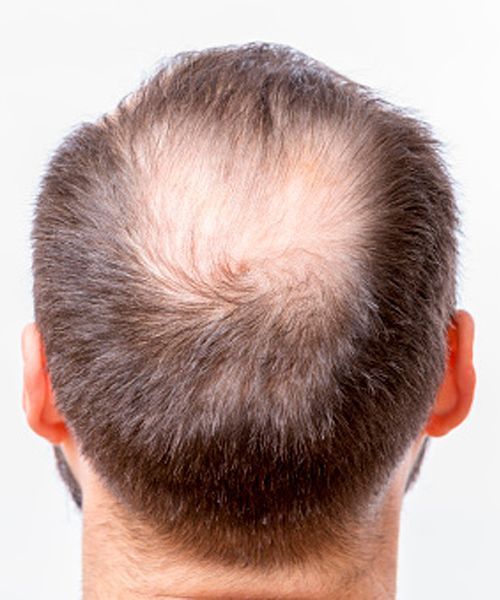
Crown Thinning
A widening bald spot at the back of the head, often noticed later than a receding hairline.
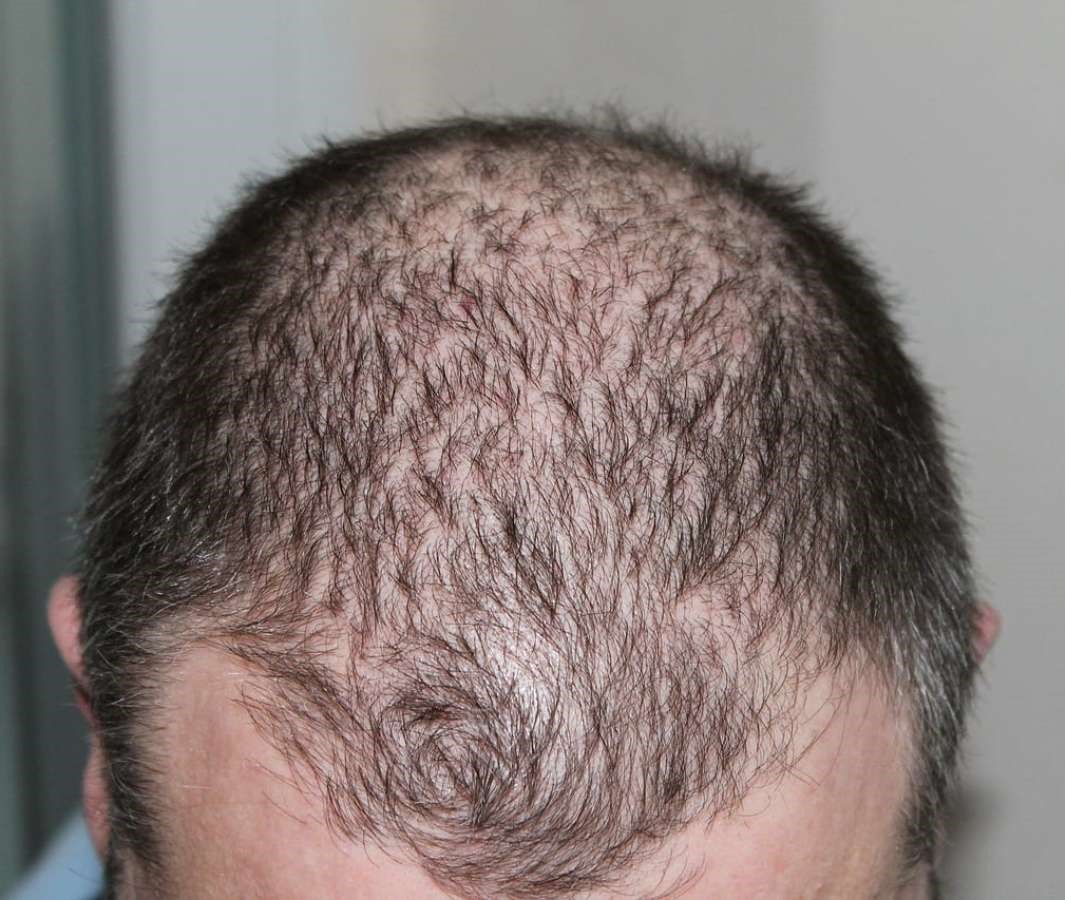
All-Over Thinning
Diffuse thinning across the scalp rather than a defined pattern.
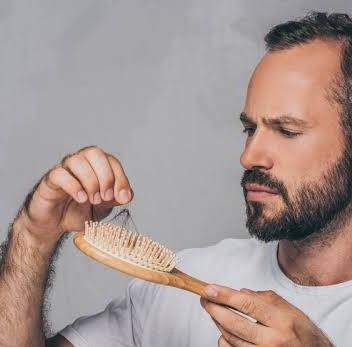
Sudden Shedding (Telogen Effluvium)
A stress- or illness-triggered shedding phase that’s usually temporary and separate from true balding.
04 — Evidence-BasedWhat Actually Works
a) Scalp Cleansing — The Foundation
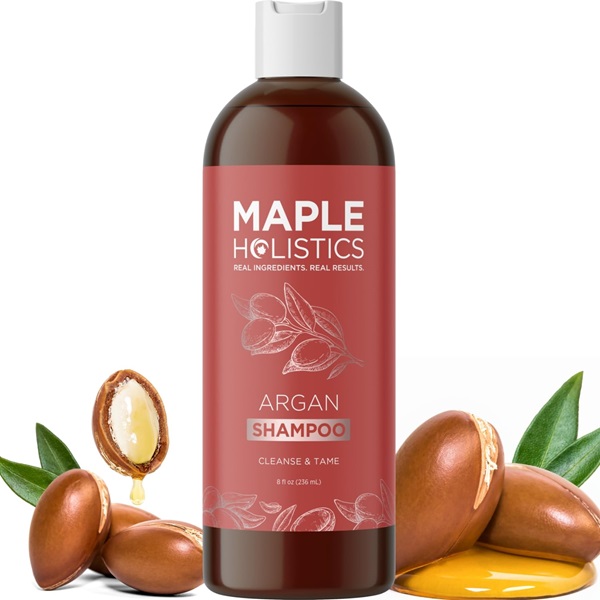
A clean, sulfate-free scalp is the base everything else builds on — buildup from oil, product, and hard water minerals blocks follicles and slows growth. Sulfate-free formulas cleanse without stripping natural oils, and lightweight oils like argan, jojoba, and avocado help balance a scalp that’s been roughened by pollution or hard water.
b) Strengthening & Growth-Supportive Ingredients
Jamaican black castor oil is a traditional strengthening oil often credited with improving scalp circulation and reducing breakage with regular use, while biotin and B-complex vitamins support the keratin structure of each strand, making hair less prone to snapping.
c) Scalp Health & Dandruff Control
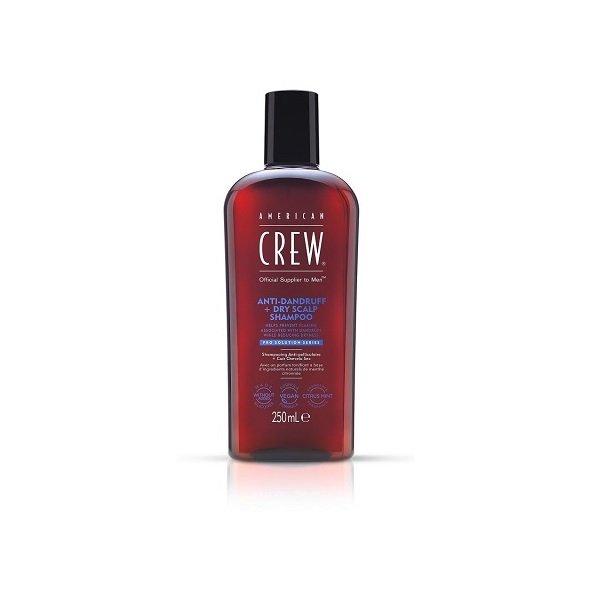
Dandruff isn’t just cosmetic — the inflammation and itching it causes can stress follicles and worsen shedding over time. Keeping flaking under control with a gentle, daily-use anti-dandruff routine removes one more variable working against thinning hair in men.
d) Nutrition From Within
Topical care alone has limits — hair is mostly protein, so it needs the right building blocks internally. Biotin, collagen peptides, vitamin C, and hyaluronic acid support the structural and hydration side of hair health from the inside, complementing whatever you’re doing on the scalp itself.
e) Scalp Oiling — The Traditional Method, Modernized
Pre-wash oiling is a culturally familiar habit in India, and it still holds up — as long as the oil itself is right. Pure, cold-pressed oils like jojoba absorb better and leave less residue than mineral-oil-heavy options, making them a better fit for regular pre-wash massage.
05 — Watch Out ForCommon Mistakes Indian Men Make
- Using harsh sulfate shampoos or, worse, bar soap on the hair.
- Ignoring hard water damage, which quietly roughens the hair shaft over months.
- Giving up after 2-3 weeks — real results from any hair treatment for men typically take 3-6 months of consistency to show.
- Over-relying on external products while ignoring diet and sleep entirely.
06 — RoutineA Simple Daily & Weekly Routine
- 2x/week: pre-wash cold-pressed jojoba oil scalp massage, 30 minutes before showering.
- Daily: sulfate-free cleanse, ideally with a biotin or castor-oil-based formula.
- 2-3x/week: anti-dandruff shampoo if your scalp tends to flake.
- Daily: a biotin or collagen supplement with breakfast, for support from the inside out.
Shop the Routine





07 — Buying GuideWhat to Look For, Not What to Buy
Rather than chasing a specific product, read labels for what they actually contain. For balding men, the two words worth scanning for on any bottle are “sulfate-free” and “biotin” — the first protects the scalp barrier, the second supports strand strength. Beyond that, prioritise a gentle daily cleanser, a dedicated anti-dandruff option if flaking is an issue, a cold-pressed carrier oil for pre-wash massage, and an internal biotin or collagen supplement. Together these five categories cover cleansing, strengthening, scalp health, and nutrition — the same four pillars covered above — without needing to rely on any single hair treatment for men to do everything at once.
08 — ClosingConsistency Beats Any Single Fix
No single product reverses male pattern baldness on its own — consistency across cleansing, strengthening, scalp health, and nutrition matters far more than any one item in the routine. This article is for general information only and isn’t a substitute for medical advice. For sudden, severe, or patchy hair loss, or if you’re considering prescription options like minoxidil or finasteride, please consult a dermatologist.
09 — FAQsFrequently Asked Questions
What are the types of male pattern baldness?
The main patterns are a receding hairline, crown thinning, and a combination of both that eventually meets in the middle. Diffuse, all-over thinning and sudden shedding are related but distinct patterns that don’t always follow classic male pattern baldness progression.
How to stop male pattern baldness?
You can’t fully stop the underlying genetic process, but you can slow it meaningfully with consistent scalp care, sulfate-free cleansing, biotin support, and — where appropriate — dermatologist-prescribed treatments like minoxidil or finasteride.
Is male pattern baldness reversible?
Follicles that have fully closed generally can’t be reactivated with over-the-counter care alone. Early to moderate thinning, however, often responds well to consistent routines and, in some cases, prescription treatment — which is why catching it early matters.
What are the stages of male pattern baldness?
Progression is generally described in stages — from a slightly receding or thinning hairline, through more noticeable temple and crown thinning, to significant loss across the top of the scalp. Dermatologists often use the Norwood scale to classify these stages more precisely.
Male pattern baldness vs alopecia — what’s the difference?
Male pattern baldness is a specific, genetic, DHT-driven form of hair loss with a predictable pattern. “Alopecia” is a broader medical term that also covers other causes like alopecia areata (patchy, immune-related loss) and telogen effluvium (stress-triggered shedding). You can read more on this comparison via a quick search here.
References & Further Reading
- Mayo Clinic Health System — “What can you do about male pattern hair loss?”
- American Academy of Dermatology Association — Hair Loss Resource Center
- American Academy of Dermatology Association — “Hair loss: Who gets and causes”
- Ho CH, Sood T, Zito PM. Androgenetic Alopecia. StatPearls, National Library of Medicine (NIH). Read on NCBI Bookshelf
- Gupta M, Mysore V. “Classifications of Patterned Hair Loss: A Review.” Journal of Cutaneous and Aesthetic Surgery, 2016;9(1):3-12. View on PubMed