
Petroleum vs Natural Lip Balm: What’s Actually Better for Your Lips?

By Medorna Editorial · May 2026 · 5 min read
Lip balm is one of those products we reach for instinctively — tucked into every bag, pocket, and bedside drawer. Yet despite daily use, dry and chapped lips remain a persistent problem for most people. If your lip balm feels like it stops working minutes after application, the problem isn’t your lips. It’s very likely the formula itself.
The market is flooded with options, but they broadly fall into two camps: petroleum-based balms and natural formulations. Understanding what each actually does — and doesn’t do — for your lips can genuinely change your experience of lip care. This isn’t about trend-chasing or clean beauty buzzwords. It’s about what the science of skin hydration tells us.
What petroleum-based lip balms actually do
Petroleum jelly (petrolatum) is the base ingredient in many of the world’s most popular lip balms — think Vaseline, ChapStick, and most drugstore options. It works by forming an occlusive layer on the surface of the skin. This barrier physically traps moisture inside, which is why petroleum balms feel instantly soothing when you apply them.
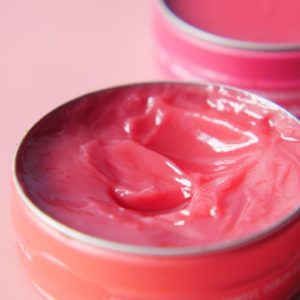
But here’s the important distinction: petroleum does not add moisture to your lips. It only seals in whatever moisture is already there. If your lips are already quite dry when you apply it, the balm is essentially sealing in very little. You’ll feel relief for fifteen or twenty minutes, and then the familiar tightness returns — prompting you to reach for the product again.
This creates what many dermatologists refer to as a dependency loop. The lips never genuinely improve because nothing in the formula is addressing the root cause of the dryness. Over weeks and months of use, the lips become conditioned to rely on the product rather than improving in their ability to retain moisture naturally.
“Petroleum-based formulas seal in whatever moisture is already there. If your lips are already dry, they’re sealing in very little.”
There are also ingredient concerns worth noting. Low-grade petrolatum can contain polycyclic aromatic hydrocarbons (PAHs), which are considered potentially harmful. Products sold in the EU must meet higher refinery standards, but in other markets, the quality of petrolatum can vary significantly. For a product you apply to your lips — and inevitably ingest small amounts of — this is worth considering.
How natural lip balms work differently
Natural lip balms take a fundamentally different approach. Instead of simply sealing the surface, the best natural formulations combine occlusive, humectant, and emollient ingredients — each playing a different role in lip hydration.
Beeswax — the natural occlusive
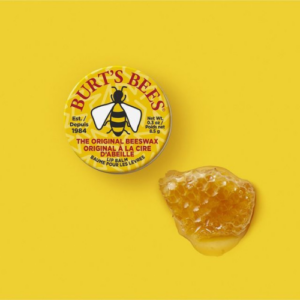
Beeswax serves a similar protective function to petroleum, but with key differences. It still creates a barrier against moisture loss, but it’s breathable — meaning it doesn’t completely block the skin’s natural processes. It also contains vitamin A, which supports healthy skin cell turnover. The texture is firmer and more stable than petroleum, which is why beeswax-based balms tend to stay on the lips longer rather than melting away quickly.
Plant oils — emollients that condition
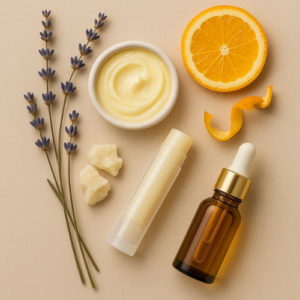
Ingredients like coconut oil, sweet almond oil, jojoba oil, and castor oil are emollients — they soften and smooth the skin by filling in the microscopic gaps between skin cells. Unlike petroleum, these oils are structurally similar to the skin’s own lipids, which means they’re absorbed rather than just sitting on top. Regular use genuinely improves the texture and suppleness of the lips over time.
Shea and cocoa butter — rich and restorative
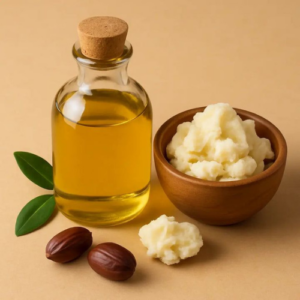
Butters like shea and cocoa provide deep conditioning, are rich in fatty acids and antioxidants, and support the skin barrier at a cellular level. They’re particularly effective for severely chapped lips because they offer both immediate comfort and genuine repair over time.
Why Burt’s Bees has earned its reputation
Among natural lip care brands, Burt’s Bees consistently comes up — and not just because of marketing. The formulation philosophy behind their core lip balm range is genuinely solid. Beeswax is the primary ingredient, supported by a blend of botanical oils and vitamin E. The formula is free from petroleum, parabens, and artificial fragrances.


What sets Burt’s Bees apart is that the improvement is cumulative. Long-term users consistently report that over two to three weeks of regular use, they stop needing to reapply as frequently.
Building a simple, effective lip care routine
A three-step daily routine
| Step | Time | What to Do |
|---|---|---|
| 1 | Morning | Apply a light, even layer before going out. Protects against wind, cold, and sun exposure. |
| 2 | Night | Apply a thicker layer before bed to support overnight repair and hydration. |
| 3 | Weekly | Gently exfoliate with a soft toothbrush or sugar scrub to remove dead skin cells. |
The Medorna perspective on lip care
At Medorna, the focus has always been on helping people move past quick fixes and towards products that deliver genuine, lasting results.